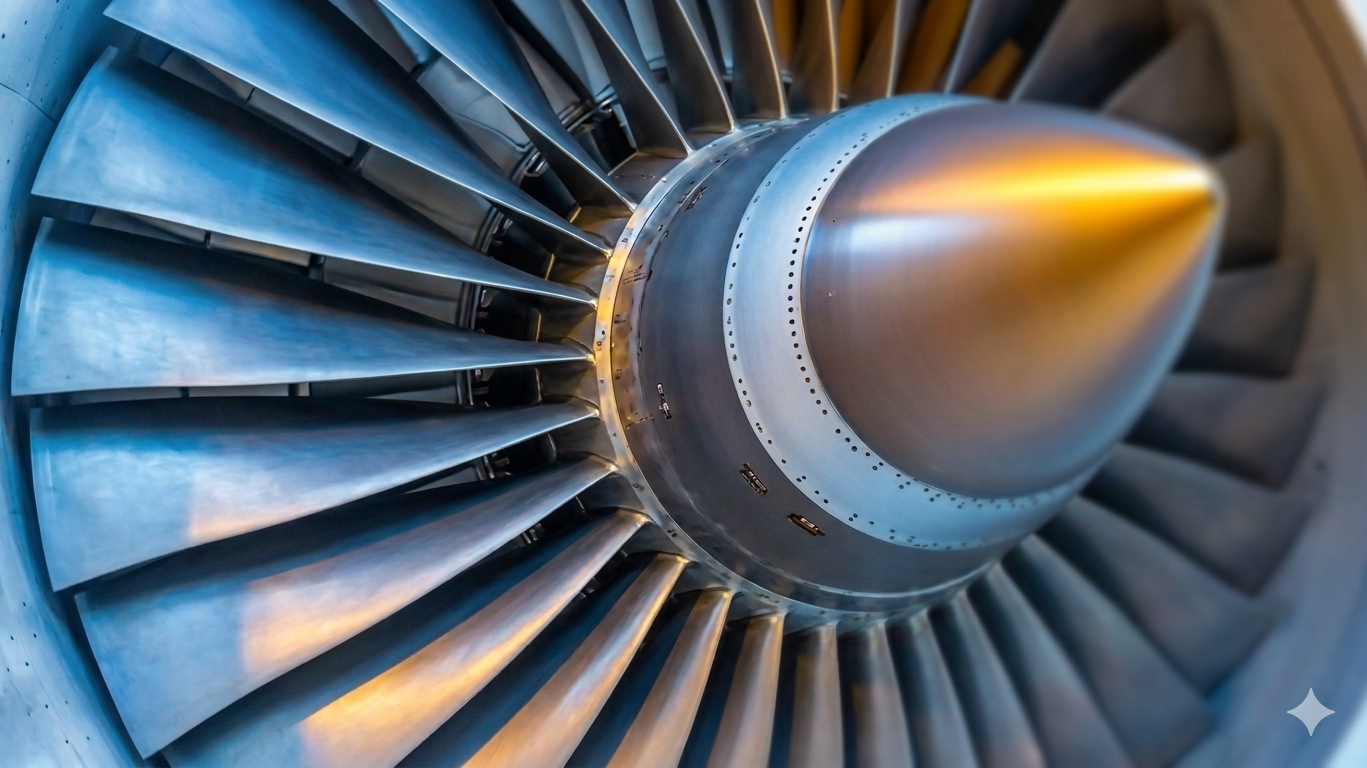
We are a driven team of engineers united by a deep passion for technology and aerospace. Our mission is to
transform visual inspection within Maintenance, Repair, and Overhaul (MRO) operations—making the process faster,
more reliable, and significantly more precise.
Our expertise spans a broad range of advanced technology domains, including computer vision, AI-driven
automation, robotics, and high-performance software systems. Combined with deep knowledge of civil
aerospace—covering aircraft structures, materials, safety standards, and operational workflows, we bridge the gap
between cutting-edge innovation and real-world aviation needs.
By blending these strengths, we're building solutions that elevate safety, efficiency, and confidence across the
entire inspection lifecycle
With offices in London and Singapore, we operate across a truly international landscape, enabling us to support
customers and partners in two of the world's major MRO hubs.
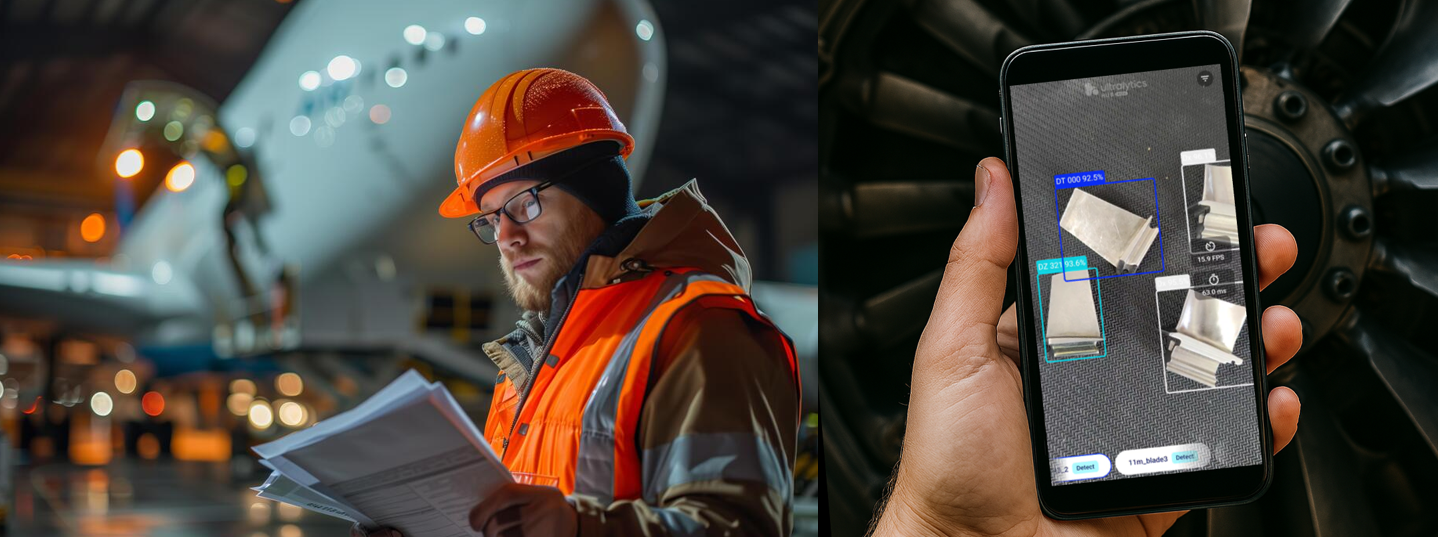
AIVisualMRO is an advanced AI platform designed to help inspectors complete visual inspections more efficiently and consistently. It combines audio transcription, computer vision, and large language models to support every stage of the inspection workflow while ensuring that the human inspector always maintains full control over the final decision.
The platform uses audio AI to transcribe spoken notes into structured reports, and visual AI (computer vision) to detect a wide range of defects in real time. At the engineering level, it uses LLMs to summarize findings, correlate images with notes, and generate holistic reports for each inspected part. It also provides analytics and predictive insights to support continuous improvement.
AIVisualMRO is fully customizable and tailored to your specific inspection processes. Because every company performs visual inspection differently, the engagement begins with observing your current workflow without interfering, followed by gathering detailed requirements.
Uses computer vision models (YOLOv8, YOLO11, YOLO26, SAM2, SAM3, etc.) to detect a wide range of defects. The inspector always has final authority—AI suggestions assist but never override human judgment. Supports both real-time detection and post-processing of recorded footage.
Converts spoken notes into structured inspection reports using speech-to-text models such as Whisper and similar technologies. Reduces manual documentation time and allows inspectors to stay focused on the part.
Large Language Models summarize inspection findings, correlate images with notes, and generate complete part-level reports. Enables consistent reporting across teams and shifts. Supports multi-part analysis, trend detection, and predictive maintenance insights.
Aggregates inspection data to identify recurring issues, defect patterns, and process bottlenecks. Provides dashboards and predictive models to support continuous improvement and quality assurance.
Every company performs visual inspection differently. AIVisualMRO begins with a non-intrusive observation phase to understand your current workflow, tools, constraints, and quality criteria. Requirements are gathered collaboratively to ensure the platform fits seamlessly into your existing operations.
The platform works with a wide range of camera sources:
AIVisualMRO supports semi-automation using collaborative co-bots. Cameras can be attached to co-bots, and with the help of a human operator, preferably a trained inspector, inspection can be performed. Cameras can either be simple computer vision cameras with no inteligence attached and videos and photos can be processed later on a local cloud/controller/server. The co-bot allows for the movements of the inspector to be replicated, repeatable. This approach reduces inspector fatigue, increases repeatability, and enables a hybrid workflow where humans and robots work together efficiently.
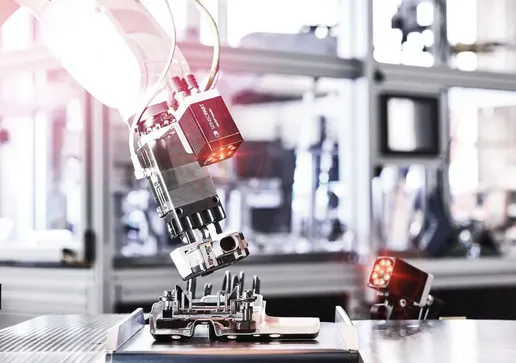
Depending on your requirements, compute can be deployed flexibly:

While we do not develop new foundational models, we have strong capabilities in training and fine-tuning existing models such as:
Training and fine-tuning are performed on your specific use cases and datasets to maximize accuracy. We also provide dataset augmentation tools when additional training data is needed. In summary:
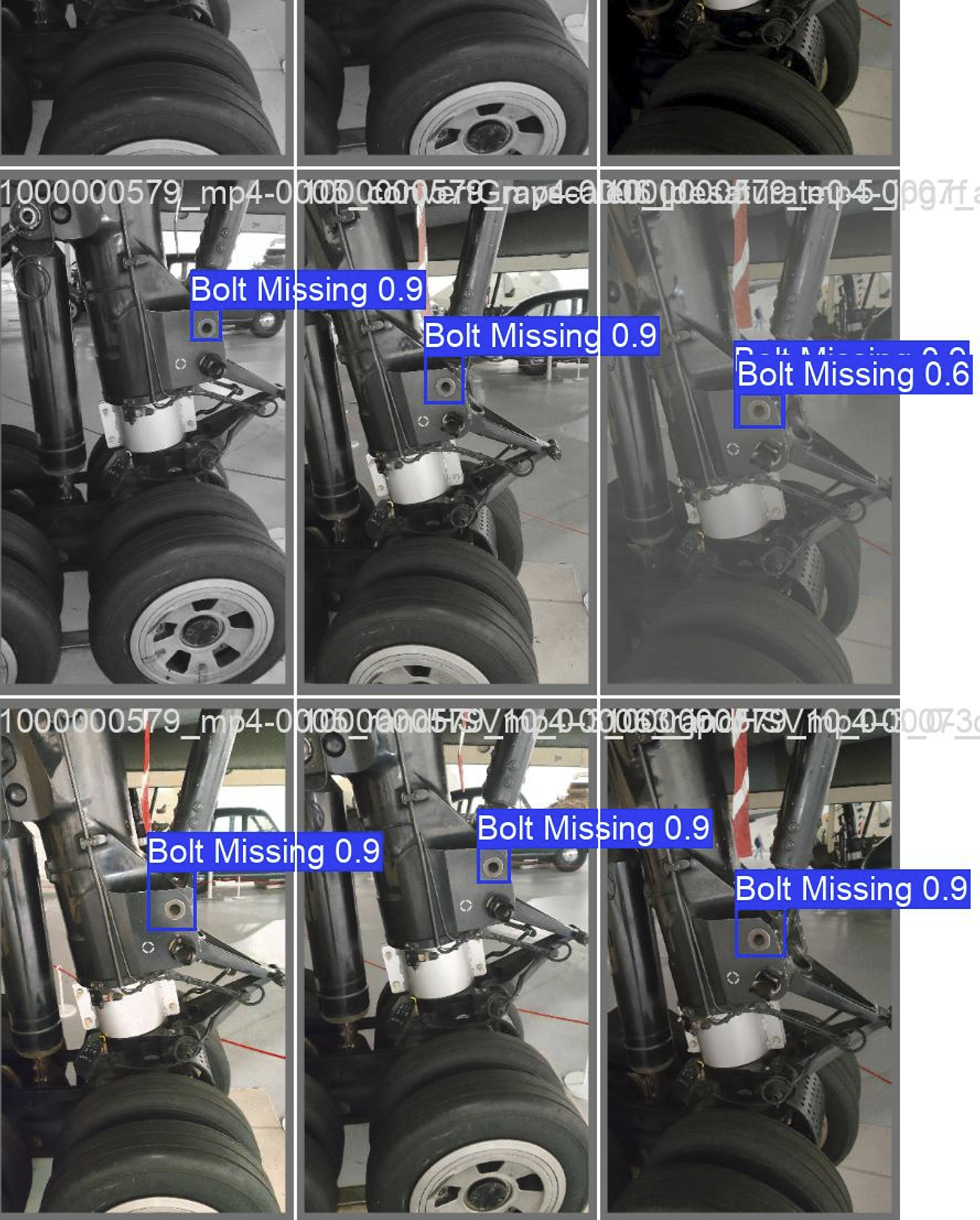
Every deployment includes a capability list tailored to your requirements, including defect types, reporting formats, integration needs, hardware preferences, and data governance constraints. AIVisualMRO adapts to your workflow and evolves with your inspection challenges.
Detection of dents, nicks and scratches in aerospace components with AiVisualMRO is a cutting-edge approach. In this example along side detection of nicks , dents, scratches, it also checks for any missing or wrong size bolts,